
科技软件 · Deeply sourced
Randall Kaplan (Akamai Technologies co-founder)Randall Kaplan(Akamai Technologies 联合创始人)
…
Industry—
BirthApprox. 1966-1967 (57 years old at time of interview and approximately 2024 filmed)
Maximum number for self-presentationNot drawn
External sources6 Belt Link
PUBLIC INTERVIEW RESEARCH
Machine-assisted English draft · Names, money figures, and source links remain tied to the Chinese research record. Switch to 中文 for the original editorial version.
—Maximum self-reported (unverified)
8GrowthEvery belt source
6Macro Data PointAlignment Year of Enterprise
6Industry structure entryBring Source
01Chapter IPersonal file.
Personal file.
| Item | Contents |
|---|---|
| Name | Randall Kaplan |
| Birth | About 1966-1967 (57 years old at the time of the interview and approximately 2024 filmed) NOT FOUND |
| Nationality/current residence | U.S. L.A./ Beverly Hills. |
| Family background | I was born as a kid and I had to learn a new way to speak and every day practice my speech for 2 hours a night') and did not take place in a word-by-word version; the wife was involved in PR proposals at the commercial stage of her company. |
| Industry | Technology / SaaS |
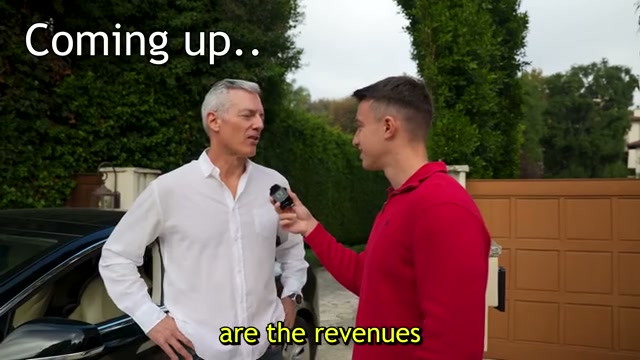
| Channel ID confirmed. | I started a technology company 25 years ago and we invented a new way to serve web traffic. And today the company serves around 30% of the web traffic, has $4 billion in annual revenue and has 10,000 employees around the world. ... Our company during the docom boom was worth $35 billion. ... How old are you now? >> 57. >> What's your name? >> Randall Kaplan. |
Education
- 'I sold t-shirts door to door at United of Michigan. 'I went to every single room. Got kicked out of every single dorm'; 'List of University of Michigan’s list of alumni' for Wikipedia. Source
- NOT FOUND (post-graduate/other not confirmed) - Wikipedia does not record his post-graduate degree; MBA etc. were not mentioned in interviews. Source
02Chapter IIHistory of growth: from birth to scale
History of growth: from birth to scale
A total of eight phases, each with its source. This is the complete chain behind the profile on the card.
| Phase | What happened? | Source |
|---|---|---|
| Teenage and bullying (10-18 years) | I was blinded as a kid and I had to learn a new way to speak and every day practice my picture for 2 hours a night'... He claims that his commercial superpower is 'tenacity' (resistence), which stems from this experience. Source | |
| University age: University of Michigan has been selling T-shirts. | When did you start your first business? > In college, I sold t-shirts door to door at United of Michigan. > Source | |
| Initial to Los Angeles: $3,000, 5 weeks and a half unemployed, 300 letters by hand | 'I came out to LA at $3,000 in the bank, lost my job after 5 and a half weeks I wrote 300 letters. ' Source | |
| Key mentors suggest:'ask for the order' | You got to ask for the order's, so he got multiple offers and picked the best one. Source | |
| Resolving to start a business in 1996: relinquishing $3 million options, 3,000 miles away from zero | 'I looked at the tech in 1996 and I left an amazing job working for a 4400 guy. | |
| Competing with the giants: Microsoft $50 billion in market value vs. $12 million of its own | You look at the odds and say, we're going to go get it. | |
| Internet bubble peak: company valuation $35 billion | 'Our company during the docom boom was worth $35 billion.' (Akamai October 1999 IPO, one of the most expensive companies in Boston at that time, had a market value of over $30 billion. Source | |
| Today: about 30 per cent network traffic, $4 billion in revenue, 10,000 employees, $12 billion in valuation | 'Today the company serves around 30 per cent of the web transaction, has $4 Billion in annal revenue and has 10,000 employes around the world'; consistent with Akamai's financial scores (FY2023 receives $3.81 billion). Source |
03Chapter IIIBusiness: What is he doing?
Business: What is he doing?
| Company | Create/start | Role | Do what? | The current scale. | Source |
|---|---|---|---|---|---|
| Akamai Technologies, Inc. | 1998 (Revised `25 years ago' entrepreneurship; decision to start a business after seeing the BusinesseWeek cover in 1996; Akamai was officially established in 1998) | Co-founder; Wikipedia 'Jonathan Seelig and Randall Kaplan joined F. Thomson Lighton and Daniel Lewin as founders' | Content distribution network (CDN) and cloud security/margin calculations: invent a business model 'Accelerating network traffic by distributed edge nodes', hosting static content and video for large websites, resisting attacks | Self-presentation: about 30 per cent of global services, network traffic, $4 billion per year, 10,000 employees, company valuations about $12 billion (in line with Akamai ' s public financial report: FP2023, $3.81 billion, market value $12-16 billion, approximately 10,000 employees) | Source |
04FIELD NOTEHis mindset and hit.
His mindset and hit.
It's just a "do what you can" chapter, and it doesn't collect how much he earns -- it doesn't mean anything to us, as you ask.
05Chapter VThe macro-environment at the time (based on his year of start-up/turn)
The macro-environment at the time (based on his year of start-up/turn)
This chapter says, "Is he on the wind or is he in a position to do so?" — the price of money, inflation, the market.
| Time | Facts | Numbers | Source |
|---|---|---|---|
| 1996 | Interviewees reported seeing Internet entrepreneurs on the cover of BusinessWeek and deciding to start a business; Akamai's forward technology (MIT's consistent Hashing algorithm) was forming that same year. | Start of Internet commercialization | Source |
| 1999-10 | Akamai in NASDAQ IPO (code AKAM), the first day of the market boom in 1999, the market value of the Internet bubble was once over $30 billion; it fell back to $1 billion after the bubble burst in 2000. | Foam period market value $35B – $1B after crash | Source |
| 2001-09-11 | Daniel Lewin, co-founder of Akamai, was killed on flight 11, 9/11. | The co-founder died. | Source |
| 2020-04 | The COVID Home Rule led to a surge in global network traffic (Netflix/YouTube Active Decline Rate), with the CDN sector entering the largest demand shock; Federal Fund interest rate 0.05 per cent over the same period | Flow surge / 0.05% | Source |
| 2022-06 | CPI peak 9.0% + 2023-07 Federal Fund interest rate 5.12%: 2022-2024 Science and Technology Unit valuation compressed, CDN/ Cloud Calculator from `Growth' to `Cash Flow', Akamai to security and cloud computing revenue | 9.0% / 5.12% | Source |
| 2020-04 | Personal saving rate in the United States, 31.8 per cent (2022-12 down to 4.2 per cent), is the macro of the cloud computing and streaming media long-term demand curve Bottom Colour | 31.8% → 4.2% | Source |
06Chapter VIIndustry structure: his track.
Industry structure: his track.
| Facts | Figures/conclusions | Source |
|---|---|---|
| The CDN industry is dominated by Akamai (founder, about 30 per cent Internet traffic) and Cloudflare, with the second tier, Fasty, Limelight/Edgio, Amazon CloudFront, Google Cloud CDN, Microsoft Azure CDN; Edgecast/Edgio 2024 bankruptcy and business continuity Clear. | Akamai shares about 30% | Source |
| Price warfare persists: CDN unit bandwidth prices have declined by about 90% since the 2000s, and Akamai has moved from the high end of 'flow-based fees' to security and calculation to sustain the Māori | CDN unit price down long term | Source |
| The cloud manufacturer, the platform player, is also a competitor: AWS CloudFront sells CDNs at a near-cost price to enable independent CDNs to shift to high-value additional services such as WAF/DDoS/rob management (Akamai security business accounts for 40% of revenue plus) | 40% of security operations | Source |
| Size data: Akamai received $3.81 billion in 2023 (FY 2024 about $3.99 billion), Cloudflare received $1.297 billion in 2023 (approximately $16.7 billion), Fastly collected $506 million in 2023 — three units still on a smaller scale than an AWS cloud operation | AKAM $3.8B / NET $1.3B / FSLY $0.5B | Source |
| Industry concentration: The total share of the top five producers of the global CDN market is about 60 + (Akamai + Cloudflare + AWS + Telecommunications System CDN + Google), with longtailers living in regional/vertical integration | CR5 About 60%+ | Source |
| The core CDN asset is PoP density and ISP interconnectivity: Akamai deploys 4,000+marine nodes globally to 130+ countries and is the main capital threshold for new entrants | 4,000+ Edge Node | Source |
07Chapter VIIFact-finding: self-incriminating vs external information
Fact-finding: self-incriminating vs external information
The rule remains the same: self-expression is distinguished from external information, or not.
| caliber | His words. | Check results |
|---|
External information not available (NOT FOUND)
- Place of birth, date of birth, current address of residence
- 'serves around 30% of the specific caliber of the web traffic' (Akamai historical market propaganda, third-party survey bodies are no longer measured by this calibre)
- Its investments outside Akamai (not mentioned in verbatim or confirmed in the current search)
- The name of the employer who left in 1996 with $3 million options.
Something special.
- The identity is highly credible but cross-referenced to self-expressed information: the interviewee 'Randall Kaplan', Wikipedia, clearly documented that Randall Kaplan was the co-founder of Akamai Technologies and alumni of Michigan University, in line with the interviewee ' s self-statements (University of Michigan T-shirts, Enterprise 1996, Boston, CDN).
- Some details are: '25 years ago' is slightly different from 1996 and the official year of Akamai (1998); 'market value $35 billion' is the peak of the Internet bubble period (non-current); '3 million of stock options', '300 letters/80 meetings', etc., are self-narrative figures, not verified by third parties.
- The co-founders of Akamai also included F. Thomson Leighton and the late Daniel Lewin, from whom the core algorithm of the CDN came; Randall Kaplan was a founding team (commercial) that joined in 1998.
- Also interviewed in the same episode were Ishmael Valdez (NextGen air-conditioning water heating), the founder of the massage gun Therabody, which covers only the Randall Kaplan section.
08Chapter VIIISource list (checkable directly)
Source list (checkable directly)
- YouTube of Hard Klocks: Asking Millionaire Mansion Owners How They Got rich
- Wikipedia: Randall Kaplan (Akamai co-founder, University of Michigan)
- Wikipedia: Akamai Technologies (found in 1998, founding team, collection/staff/nodes)
- Wikipedia: Daniel Lewin.
- Wikipedia: Content complete network
- Wikipedia: Cloudflare
Original source in channel
- [Fe7v SWuhY4] Asking Millionaire Mansion Owners How They Got rich Video .
Sources and verification links
- YouTube of Hard Klocks: Asking Millionaire Mansion Owners How They Got rich External
- Wikipedia: Randall Kaplan (Akamai co-founder, University of Michigan) External
- Wikipedia: Akamai Technologies (found in 1998, founding team, collection/staff/nodes) External
- Wikipedia: Daniel Lewin. External
- Wikipedia: Content complete network External
- Wikipedia: Cloudflare External