
Todd GravesTodd Graves
Raising Cane's Founder: The business school's plan to sell only fried chickens won the lowest score in class, then went to the refinery and Alaska to fish for money.
Machine-assisted English draft · Names, money figures, and source links remain tied to the Chinese research record. Switch to 中文 for the original editorial version.
01Chapter IPersonal file.
Personal file.
Raising Cane's Founder: The business school's plan to sell fried chickens only scored the lowest on the class, then went to the refinery and Alaska to fish for money, opened the first shop in 1996, and now the Forbes calibre is worth billions of dollars.
| Item | Contents |
|---|---|
| Name | Todd Bartlett Graves |
| Birth | 1972 (Wikipedia and Forbes both recorded born 1972; Forbes 2026-09 real-time file shows Age 54; in this set of interviews he claims to be 53 years old) New Orleans, USA, raised in Baton Rouge |
| Nationality/current residence | Forbes Archive: United States |
| Family background | In Baton Rouge, middle-born families grew up (five families). Grokipedia claims that her father was an offensive tackle player of the New Orleans Saints in the 1970s, and later sold cars at the garage, where the mother assisted the family business (the details were not confirmed by authoritative sources). Married to Gwen Drain in 2000 (who herself was McDonald's Unionist, both of whom met in high school), with two girls living in Baton Rouge. |
| Industry | Catering chain |
| Channel ID confirmed. | Interviewee (How I Turned $50,000 Into $20 Billion) |
Education
- Episcopal School of Baton Rouge - High School. Grokipedia claims that he graduated in 1990 and that he had a four-year school team (Football/Truck). Grokipedia is an AI-generated content with moderate reliability and is not confirmed twice by authoritative sources. Source
- University of Georgia - undergraduate. Forbes archives are recorded as Bacchelor of Arts/Science, The University Of Georgia; Wikipedia's diary from the University of Georgia; Grokipedia claims to have received a Bachelor of Arts in the Directions in 1994. Key point: He graduated from UGA, not LSU. Source
- Louisiana State University (a collaborator, not himself) — he co-authored with his old friend Craig Silvey (LSU student) a business plan for 1994 for selling fried chickens only, submitted by Silvey to his LSU business plan writing class, and was awarded the lowest grade for the entire class (Wikipedia as B-minus). Word by word, Todd says it's his class, but Wikipedia and Business Insider are clearly Silvey's classes, and they attend different universities. Source
02Chapter IIHistory of growth: from birth to scale
History of growth: from birth to scale
A total of eight phases, each with its source. This is the complete chain behind the profile on the card.
| Phase | What happened? | Source |
|---|---|---|
| Childhood and the family (1970s-1980s) | Born in 1972 in New Orleans, growing up in Baton Rouge, with five people, middleborn. Self-declared entrepreneurial impulses from an early age: having worked in a community lemon stand, cutting grass and working in restaurants during high school/university. Source | |
| Education and the "underrated business plan" (1990-1994) | He graduated from Episcopal School of Baton Rouge and later from University of Georgia. In 1994, he co-authored with his friend Craig Silvey a business plan for a restaurant that sells only fried chickens, which was submitted by Silvey to his LSU business programme class; according to the professor, "the menu is too narrow and everyone else is adding to the class", giving the lowest score. Todd used this denial as fuel -- he said in his interview, "Every time someone tells me it doesn't work, I'd rather show it to him. Source | |
| Early work and food initiation (1980s-1990s) | He worked in restaurants from an early age and at a chicken-butter shop in Athens, Georgia, which directly inspired his idea of a chicken-willow shop. Source | |
| Financing denied. High-intensity manual labour capital savings (1994-1995) | He was denied access to all local banks and decided to make his own principal. According to the official company calendar: he flew to Los Angeles in 1994 to work approximately 90 hours a week as a boilermaker (boiler/welder) in the refinery; in 1995, he went to Alaska to camp on the mosaic for a month, to fish in Bristol Bay sockeye and work 20 hours a day. Source | |
| First shop, 1996: funds and sources | He came back to Louisiana with the money he saved. The CNBC quotes itself: about $40,000-$50,000 is his own savings and about $100,000 from loans with relatives and SBA. In this set of interviews, he's saying a little bit differently: "I started with about $50,000 in my own money and then got $50,000 in a SBA loan. 1996-08-28 Started at the LSU North Gate Highland Road & State Street, and officially opened until 9 p.m. due to a cashier failure, Todd went to the street and asked for help until 3.30 a.m. The name of the store was intended to be "Sockeye's" and then, as suggested by his friends, was renamed after his yellow Labrador Raising Cane. Source | |
| Early expansion and the 2005 Katrina crisis | By 2005, there were 28 stores (all in Louisiana) with an annual income of approximately $54M. He started with a 15% high-interest loan from a private investor, and then used it to pry a larger amount to the bank -- he later called it a "stupid financial strategy." As a result of Hurricane Katrina, 21 businesses were closed, and he was at risk of default and almost forced to sell his shares; he eventually saved his equity by returning to business within two weeks and becoming a small number of local restaurants. Since then, he has said that he will never do anything more than leverage. Source | |
| Scale (2018-2025) | In 2018, the company had 400 stores, and since then it had 50 + a year, and in 2024, 118 businesses were opened in a single year. At the beginning of the 2020 epidemic, he gave up his salary with Co-CEO Kumaran, kept all about 25,000 employees, and sustained his business with Drive-thru. In 2024, companies recorded their first one billion-class single-season sales of $5.1B, and in June 2025 officially surpassed the KFC as the third largest United States chicken chain (Technomic 2024 system sales ranked 18th in the United States, up from 10th in the previous year). His stated goal was to sell $10B+ annually to the top ten chains in the United States. Source | |
| Net assets versus current position (2024-2026) | In this set of interviews he claims "I'm worth of 20 million". Forbes caliber: $2024-10 Forbes 400 was listed for the first time as $9.5B (US 107); 2025-04 Forbes described its wealth as `almost doubling' to about $17.2B; 2025-09 Forbes reported its home to $22B (about 92 per cent holding), column Forbes 400 46; 2026-09-16 Forbes net real time value $20B, 137th globally. That is, his self-statement is consistent with Forbes ' latest caliber direction, but the figures fluctuate from year to year. Source |
03Chapter IIIBusiness: What is he doing?
Business: What is he doing?
| Company | Create/start | Role | Do what? | The current scale. | Source |
|---|---|---|---|---|---|
| Raising Cane's Restaurants, LLC | 1996 (first place, 1996-08-28 opening) | Co-Founder, Co-CEO (co-CEO with AJ Kumaran since 2018) | Quick food chain for fried willows only: chicken willows, crinkle-cut fries, Texas toast, coleslaw, toast and sign-up Cane's sauce; menus almost unchanged for 30 years | Forbes 2026-09: approximately 900 stores, 42 states, system sales $5.7B; CNBC 2025-06: 2024 system sales $5.1B (more than doubled in 2021) and over 900 stores (only 500 in 2020) | Source |
| Sockeyes LP | NOT FOUND. | Founders and controlling shareholders | A partnership holding Raising Cane's shares | Grokipedia and Forbes reported that he owns about 90% of the shares through Sokeyyes LP, which is privately owned and not publicly owned. | Source |
04FIELD NOTEHis mindset and hit.
His mindset and hit.
It's just a "do what you can" chapter, and it doesn't collect how much he earns -- it doesn't mean anything to us, as you ask.
- "I own the business, I get to make the right outcomes base on the long-term process of the business."
- And also, too, is these young adults, they'll start businesses, and then they'll start writing out in different products and services.
- Let's say food costs goes up, I don't have to make short-term studies to do short-term guns.
- My advice to people would be good to people and leave this world better than you found it.
- "you ask them your questions directly and get discussed from these business owners, the people that I understand."
Figures he mentioned (reference only, not verified)
- “What is your net worth? I'm north of 20 billion”
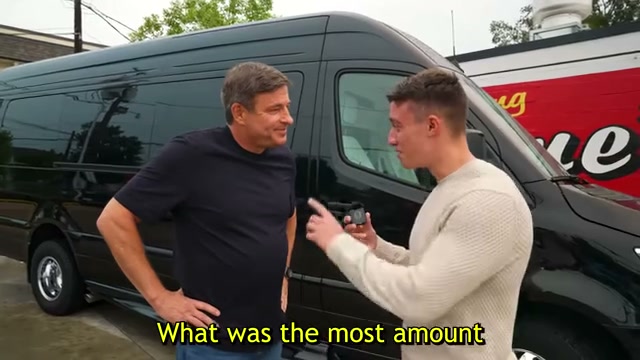
- “What was the most amount of money that you made a single year? 400 million”
- “If you lost everything tomorrow, could you make it all back? Absolutely I could ... I would stick to the restaurant business cuz I know it”
The beginning of his story.
- In 1996, in Baton Rouge, Louisiana, a chain of fried chickens was created.
05Chapter VThe macro-environment at the time (based on his year of start-up/turn)
The macro-environment at the time (based on his year of start-up/turn)
This chapter says, "Is he on the wind or is he in a position to do so?" — the price of money, inflation, the market.
| Time | Facts | Numbers | Source |
|---|---|---|---|
| 1996-08 | Effective United States Federal Fund interest rate (monthly average) at opening of first place | 5.22% | Source |
| 1996 | United States annual unemployment rate (annual average) | 5.4% | Source |
| 1996 | United States CPI-as-similar (December) | 3.4% | Source |
| 1996-08 | United States 30 Fixed annual mortgage rate (monthly average) - the setting of opening costs in a high interest rate environment | 7.98% | Source |
| 1996-08 | WTI crude oil prices (monthly average) | $21.87 barrels | Source |
| 2005-09 | Effective Federal Fund interest rate for Hurricane Katrina for the month / WTI crude oil | 3.61 per cent / $65.49 per barrel (he ' s debt crisis was amplified by soaring energy and insurance costs) | Source |
| 2020-04 | Federal funds effective interest rate when the epidemic hit hardest; individual savings rate in the United States | 0.05%;31.8% | Source |
| 2022-06 | United States, CPI, same peak (high point of inflation in current round) | 9.0% | Source |
| 2022-12 | United States federal funds effective interest rate; individual savings rate | 4.10%;4.2% | Source |
| 2023-07 | Effective interest rate on United States federal funds (highest area of the current cycle) | 5.12% | Source |
06Chapter VIIndustry structure: his track.
Industry structure: his track.
| Facts | Figures/conclusions | Source |
|---|---|---|
| Total size of fast food industry in America | $423.7B (2026, IBISWorld), five years CAGR approximately 1.2% | Source |
| The size of the race track is broken down in the United States. | $62.6B (2024), year-on-year + 2.7%; approximately $63.7B in 2026, only 162 enterprises in the United States, 2020-2026 CAGR approximately 4.3% | Source |
| First in the track, Dick-fil-A. | United States sales in 2024 $22.75B, 3,109 house stores (Technomic data); single store average turnover (AUV) $6.1M, the highest in the pre-US 50 chain | Source |
| Second, third and KFC position changes | United States sales ranking in 2024: Chuck-fil-A #1, Popeyes #2, Raising Cane's #3 ($5.1B system sales); KFC United States sales approximately $4.9B with a net decrease of 122 stores (3,669) in the year, falling the top three and even retreating to 5 by consumer expenditure (Wingstop) | Source |
| Raising Cane's single-shop economy | AUV approximately $4.9M (QSR 2025 ranking, second only to Dick-fil-A) and another caliber (S&P Global Ratings) in 2024 AUV reached $6.2M, more than twice the average of fast service industries | Source |
| Peer ladder (2019 Technomic data, evolution of pattern) | Pick-fil-A $11.32B/2,470 shop; KFC $4.55B/4,065 store; Popees $3.81B/2,476 store; Zaxby's $1.89B/910 store; Raising Cane's $1.47B/457 store; Winstop $1.36B; Bojangles' $1.33B store | Source |
| The whole rate of increase for fried chicken. | In 2019, United States fried chicken sales grew by 9.9 per cent, and the door shop grew by 2.3 per cent - the track itself was in a high expansion period. | Source |
| The fast-food list profit structure (todd collection self-presentation) | The restaurant's netting down, and it's only 5-10 cents per dollar, so it's got to be high sales, high frequency. | Source |
| Size of the global fast food industry | $1.1 trillion (IBISWorld, 2025/2026), approximately 588,000 businesses worldwide | Source |
07Chapter VIIFact-finding: self-incriminating vs external information
Fact-finding: self-incriminating vs external information
The rule remains the same: self-expression is distinguished from external information, or not.
| caliber | His words. | Check results |
|---|---|---|
| Narrative $20B | What is your net worth? I'm north of 20 billion | External verification, see section above |
| Narrative $400M | What was the most amount of money that you made a single year? 400 million | External verification, see section above |
| Description | If you lost everything tomorrow, could you make it all back? Absolutely I could ... I would stick to the resta | External verification, see section above |
External information not available (NOT FOUND)
- Refinery Boilmaker and Alaska fish specific hourly/annual salary figures: NOT FOUND. Wikipedia, Forbes, CNBC, Business Insider, Raising Cane's official calendar (including Wayback archive), Bloomberg profile, Grokipedia. The year can be confirmed (1994 refinery, 1995 Alaska), but the only amount to be given is a low-reliability source, finance-montly.com, which claims that Alaska earns up to $100,000 a season and cannot be cross-checked.
- "$400 million in a single year" -- it's just a self-statement, no third-party verification.
- He graduated from high school in 1990 and his father was an attacker for the New Orleans Saints — only in Grokipedia, but no authoritative sources were identified.
- Forbes Real-time net assets $20B are estimates, non-audit data.
Something special.
- There is a contradiction in the attribution of business planning classes: Todd in this set of interviews agreed that it was his class, but Wikipedia, Business Insider, CNBC all documented that the business plan was presented by a friend, Craig Silvery, in the LSU business class, and the rating professor criticized the menu as too narrow. Todd himself read United of Georgia.
- The opening of the store is of inconsistent calibre: this set of interviews says he "about $50,000 owns his loan + $50,000 SBA" and CNBC quotes it as "$40,000 – $50,000 own + about $100,000 (family and friends + SBA loan)". The two need to be presented in parallel, not just one.
- Net assets are highly volatile and not cash realized: he describes himself as `north of 20 billion'. Forbes cal. 2024-10 is $9.5B, 2025-04 is approximately $17.2B, 2025-09 is $22B, 2026-09 is $20B in real time. So `$20B+' is in line with Forbes' latest estimates, but is a valuation (based mainly on 90% + number of shares held and company sales) and not a disposable cash.
- `$400 million a single year' has no third party to approve: company net sales in 2023 $3.7B, system sales in 2024 $5.1B, $400M for one year for an individual cannot be certified from public financial statements (company is private, not disclosed).
- The year of the first international chemical store is different: Wikipedia writes that it first entered Kuwait in 2014, Grokipedia writes in 2015.
- Shareholding calibration: This set of interviews says "91-92%" and Forbes/CNBC is mostly `over 90%' and another 92%.
- Grokipedia produces encyclopedias for AI, only as a bystander (year of high school graduation, father's NFL experience, etc.) and is not confirmed twice by authoritative sources.
- This collection of script-by-words from YouTube Autosubtitles contains a hearing error (e.g. writing of the chicken finers as chicden figures, Raising Cane's as Raisin Canes), the amount of which is based on external information.
08Chapter VIIISource list (checkable directly)
Source list (checkable directly)
- Wikipedia: Todd Graves (entrepreneur)
- Wikipedia: Raising Cane's Chicken Fingers
- Forbes: Todd Graves real-time files (including education, place of residence, net value, original language)
- CNBC (2024-10-05): How Raising Cane's founder Todd Graves became an unlikely billionaire
- CNBC (2024-10-30): Raising Cane's almost failed after Katrina
- CNBC (2025-06-30): How Raising Cane's overtook KFC to become the No. 3 chicken chain
- Business Insider: How Todd Graves built Raising Cane's
- Raising Cane's Official Year Table Who We Are (Wayback Archive)
- Bloomberg Billionaires Index: Todd Graves
- Restaurant Business / Technomic: The largest chicken chains in the U.S.
- Restaurant Dive: KFC's US sales fall behind Raising Cane's, Wingstop
- QSR Magazine: QSR 50 2025 Top Fast-Food Chicken Chains
- IBISWorld: Fast Food Restaurants in the US
- IBISWorld: Fast Food Chicken Restaurants in the US
- IBISWorld: Global Fast Food Restaurants
- Money Digest / Technology: Kick-fil-A 2024 Sales and stores
- Grokipedia: Todd Graves (entrepreneur) (AI generation, bystander only)
- YouTube Original Collection: How I Turned $50,000 Into $20 Billion
- FRED: Effective interest rate on federal funds DFF
- FRED Unemployment rate
- FRED: CPI CPIAUCSL
- FRED Individual Savings Rate PSAVERT
- FRED: 30 annual mortgage interest rate
- FRED: WTI crude oil DCOILWTICO
Original source in channel
- [n5EmuiLNVjg] How I Turned $50,000 Into $20 Billion Video . .
Sources and verification links
- Wikipedia: Todd Graves (entrepreneur) External
- Wikipedia: Raising Cane's Chicken Fingers External
- Forbes: Todd Graves real-time files (including education, place of residence, net value, original language) External
- CNBC (2024-10-05): How Raising Cane's founder Todd Graves became an unlikely billionaire External
- CNBC (2024-10-30): Raising Cane's almost failed after Katrina External
- CNBC (2025-06-30): How Raising Cane's overtook KFC to become the No. 3 chicken chain External
- Business Insider: How Todd Graves built Raising Cane's External
- Raising Cane's Official Year Table Who We Are (Wayback Archive) External
- Bloomberg Billionaires Index: Todd Graves External
- Restaurant Business / Technomic: The largest chicken chains in the U.S. External
- Restaurant Dive: KFC's US sales fall behind Raising Cane's, Wingstop External
- QSR Magazine: QSR 50 2025 Top Fast-Food Chicken Chains External
- IBISWorld: Fast Food Restaurants in the US External
- IBISWorld: Fast Food Chicken Restaurants in the US External
- IBISWorld: Global Fast Food Restaurants External
- Money Digest / Technology: Kick-fil-A 2024 Sales and stores External
- Grokipedia: Todd Graves (entrepreneur) (AI generation, bystander only) External
- YouTube Original Collection: How I Turned $50,000 Into $20 Billion External
- FRED: Effective interest rate on federal funds DFF External
- FRED Unemployment rate External
- FRED: CPI CPIAUCSL External
- FRED Individual Savings Rate PSAVERT External
- FRED: 30 annual mortgage interest rate External
- FRED: WTI crude oil DCOILWTICO External